
What Is Pig Butchering?
Pig butchering scams are a form of long-term investment fraud where scammers build deep trust with a victim before convincing them to invest in a fake opportunity, usually involving cryptocurrencies. While many users enter the crypto space to build wealth, scammers prey on that ambition.
Pig butchering is one of the most psychologically manipulative attacks that exist in the industry today. In this article, we will break down how this notorious crypto scam works, how to spot early signs of grooming and how to protect yourself and others from falling victim.
These scams are uniquely dangerous because they do not rely on urgency or obvious red flags early on. Instead, they feel personal, friendly and legitimate until it's too late.
Why Is It Called "Pig Butchering"?
The term pig butchering (from the Chinese shā zhū pán, meaning "fattening the pig before slaughter") describes the process behind this scam. Scammers slowly fatten up the target by investing time and emotional energy into a fake friendship or romantic relationship, while creating a false sense of financial success. Once the victim is fully invested, the scammer butchers them for their funds.
Unlike a typical hack, this isn't a technical exploit. It is social engineering in its most dangerous form.
How The Scam Plays Out: The Five Stages
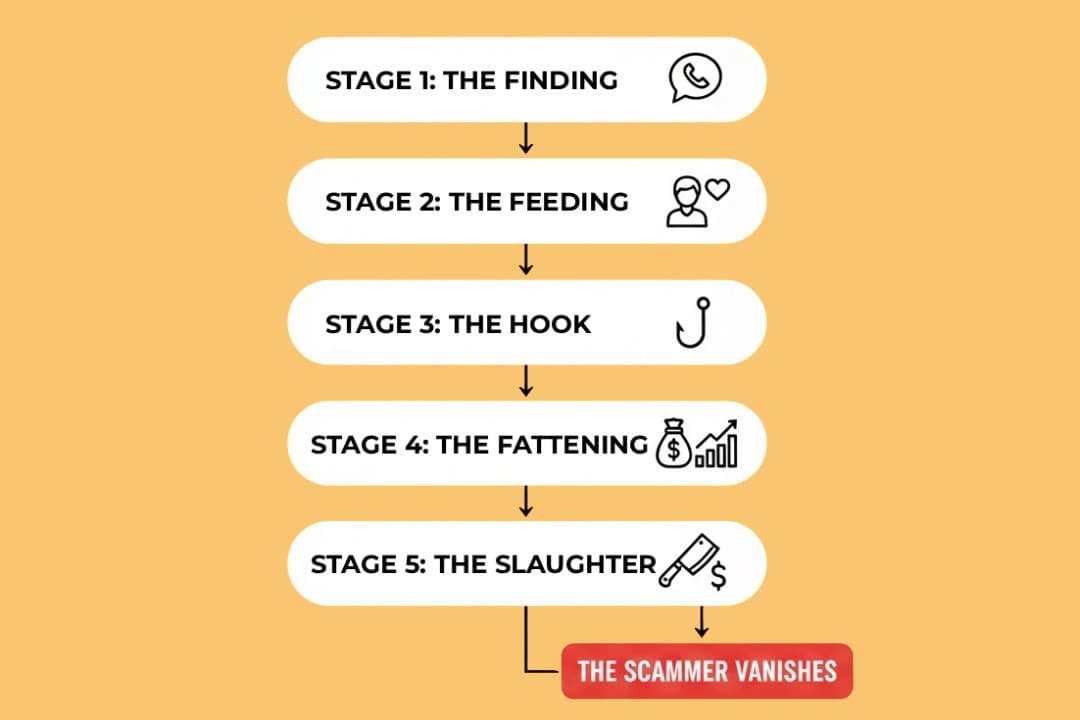
Pig butchering scams follow a structured, long-term pattern. Details may vary, but these scammers patiently follow a specific five-stage playbook:
1. Initial Contact
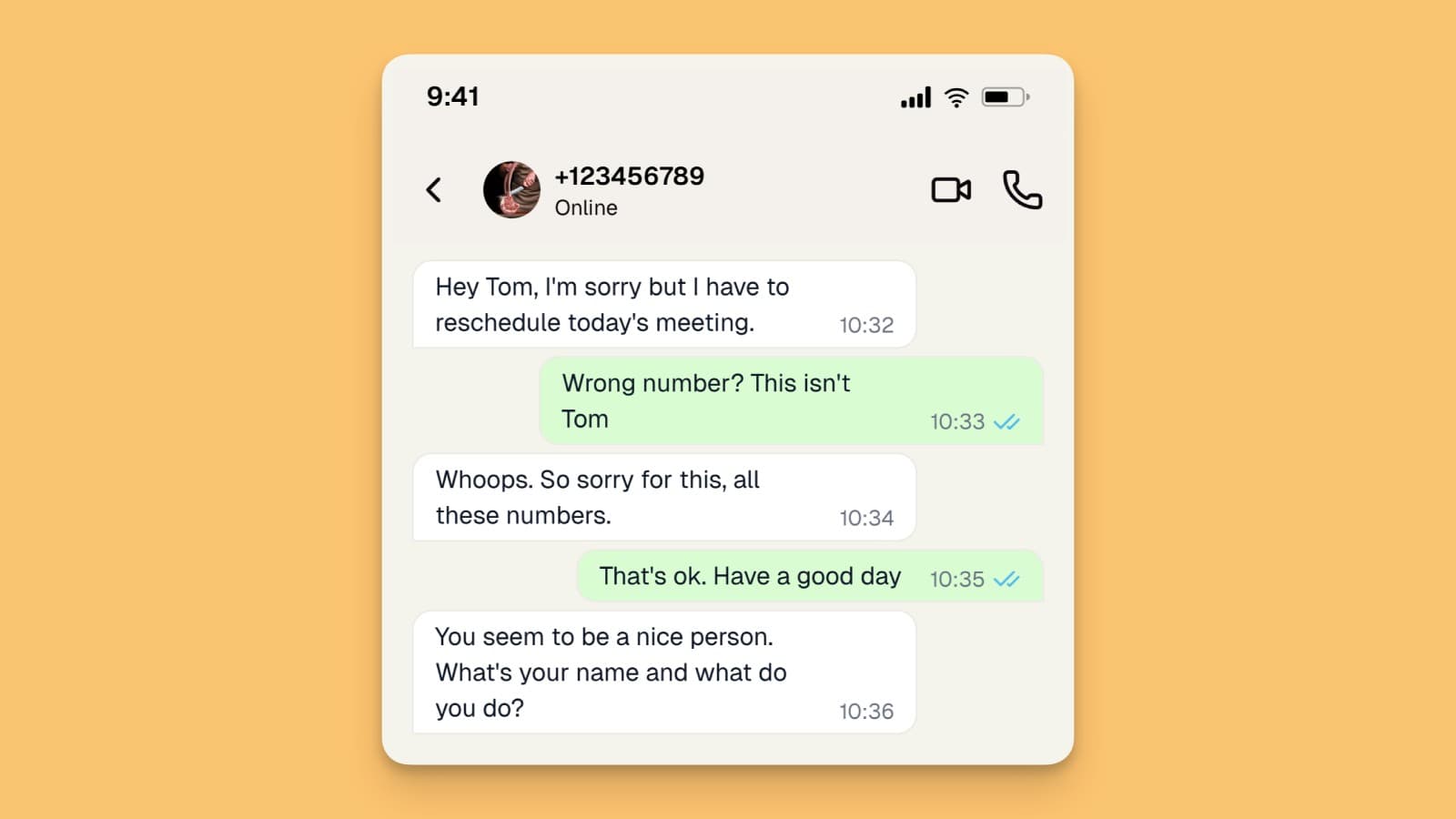
It usually starts with an innocent-looking message on WhatsApp, Telegram, a dating app or any social media network. At this stage, nothing feels suspicious. The conversation often appears accidental or friendly.
2. The Grooming Phase
Over days or weeks, the scammer builds a deep, emotional bond. This often includes daily conversations, sharing photos of "their" life (often stolen from influencers) and consistent emotional support. One of the biggest red flags is how available they are. Typically, they are very responsive and appear to be the perfect friend or partner.
During this phase, money is intentionally not discussed. The primary goal is to establish a genuine, trust-based relationship before any financial opportunity is introduced.
3. Introduction of an Investment Opportunity
Once trust is established, the scammer introduces risk-free investing. The attacker will create the illusion of their own financial success and offer to help the victim get started. Sometimes by referring to a mentor, a wealthy relative or an insider with guaranteed tips. To prove their success, they might show you fake trading dashboards or edited screenshots of massive profits.
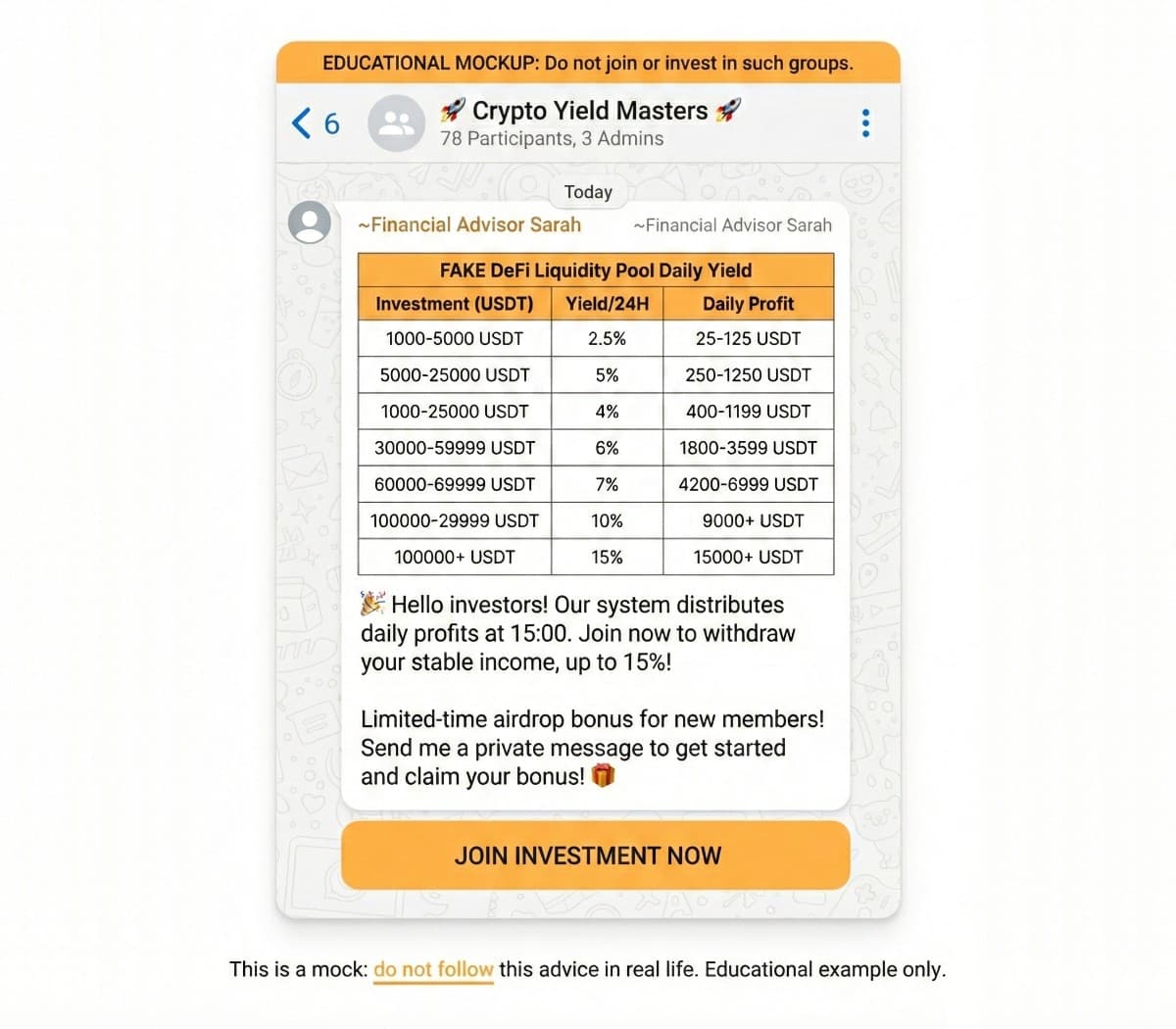
In this phase, their primary goal is to make you believe that there is absolutely no risk involved and that you are missing out on easy money.
4. Small Gains and Escalation
To build confidence, the scammer encourages you to make a small initial "test" investment. After funds are deposited into the fake platform, your balance will appear to grow quickly.
In many cases, victims are allowed to make a small, successful withdrawal. This is done intentionally to reinforce the illusion that the platform appears legitimate and that funds can be easily accessed. Once that belief is established, victims are far more likely to invest larger sums. Often, this involves their entire life savings or even money borrowed from friends and family. This is the "fattening" phase of the scam, where the victim is primed for the final loss.
5. The Butchering
The "butchering" begins when a victim attempts to withdraw their profits. Suddenly, the previously helpful friend and the smooth-running platform become obstacles. This is the final stage of the scam, where the attacker attempts to extract as much money as possible from the victim before disappearing.
The Withdrawal Trap typically involves several tactics:
- The Tax Demand: The platform claims a 15–30% "tax", "IRS fee" or "international transfer fee" must be paid before funds can be released
- The Frozen Account: Victims are told their account has been flagged for "suspicious activity" or "money laundering" and that a security deposit is required to unlock the funds
- The Blackmail: If payments stop, the scammer may pivot to threats, claiming they will report the victim to authorities or expose private conversations
None of these payments resolve the issue. Each demand is simply an attempt to extract more money.
The Golden Rule: No legitimate exchange or investment platform will ever ask you to pay a fee or tax separately before allowing a withdrawal. In real systems, fees are deducted directly from the balance. If they ask for more money to release your funds, it is a scam.
Once payments stop or funds run out, communication ends. The scammer blocks the victim, the platform disappears and the funds are gone. At this point, the scam is complete.
How To Stay Safe
The good news is that you don't need to be technically skilled to avoid pig butchering scams. You just need to be mindful.
Keep the following in mind:
- Be cautious of strangers offering investment advice, especially through private messages or dating apps
- Never trust an investment platform you cannot verify independently through reputable sources
- Avoid rushing into financial decisions, no matter how convincing or friendly someone appears
- If an opportunity sounds too good to be true, it usually is
Most importantly:
- Talk to trusted friends, family members, or professionals before making large investment decisions
- Do not isolate yourself if something feels off. Scammers rely on secrecy and pressure to succeed
Victims of pig butchering scams often blame themselves. In reality, these scams are built on professional, emotional manipulation, not carelessness or lack of intelligence. They are among the most calculated forms of social engineering and rely on the same psychological triggers as cults and high-pressure sales. Recognizing the signs early can help you protect yourself. This can also help prevent others from becoming victims.
What To Do If You Suspect A Pig Butchering Scam
If you are currently talking to someone who fits these patterns, or if you have already invested money and are having trouble withdrawing it, take action immediately.
1. Stop All Communication
Do not confront the scammer. Do not tell them you know this is a scam. If they realize you are onto them, they will move quickly to drain any remaining funds or escalate their blackmail tactics. Simply stop responding to all communication.
2. Secure Your Remaining Assets
If you connected your wallet to a "trading dApp" or "liquidity pool" they recommended, the scammer may have permission to move your tokens.
- Use Revoke.cash to audit your wallet
- Look for any unfamiliar contracts or unlimited approvals and revoke them immediately
- If you shared your seed phrase or private keys at any point, your wallet is compromised. Try to move your remaining funds to a brand-new, secure wallet address immediately
3. Do Not Pay "Taxes" or "Fees"
If the platform asks for additional payments to unlock withdrawals, do not send them. This is the final stage of the butchering process. No matter what is promised, paying these fees will not result in getting your money back.
4. Beware Of Recovery Scammers
Once you go public about being scammed (or even if you just search for help), you may be targeted by so-called Recovery Services. These actors often claim to be ethical hackers or blockchain investigators who can recover your funds for a fee.
Because blockchain transactions are irreversible, these recovery services are almost always a second scam designed to target victims who have already lost money.
5. Document And Report The Fraud
Document everything. Take screenshots of your conversations, the fake platform, URLs and the wallet addresses you sent funds to. File a report by contacting your local national cybercrime authority. While recovery is unlikely, reporting helps protect others and supports ongoing investigations.